


The information provided on this website does not, and is not intended to, act as legal, financial or credit advice. See Lexington Law’s editorial disclosure for more information.
A strong credit score can open financial doors—better loan terms, lower interest rates, and more favorable borrowing options. Both FICO® and VantageScore® range from 300 to 850, and higher scores generally signal lower risk to lenders.
Whether you’re starting from scratch or working to improve an existing score, you can take meaningful steps toward better credit. Because every credit profile is unique, there’s no universal timeline for improvement—but the 15 strategies below represent some of the most effective ways to build credit fast in 2026.
Key takeaways
- Making on-time payments is one of the fastest ways to build credit since payment history makes up 35% of your FICO® score.
- Becoming an authorized user on a well-managed credit card can help your credit profile grow over time.
- Identifying and removing errors from your credit report ensures your score reflects your true credit behavior.
Table of contents:

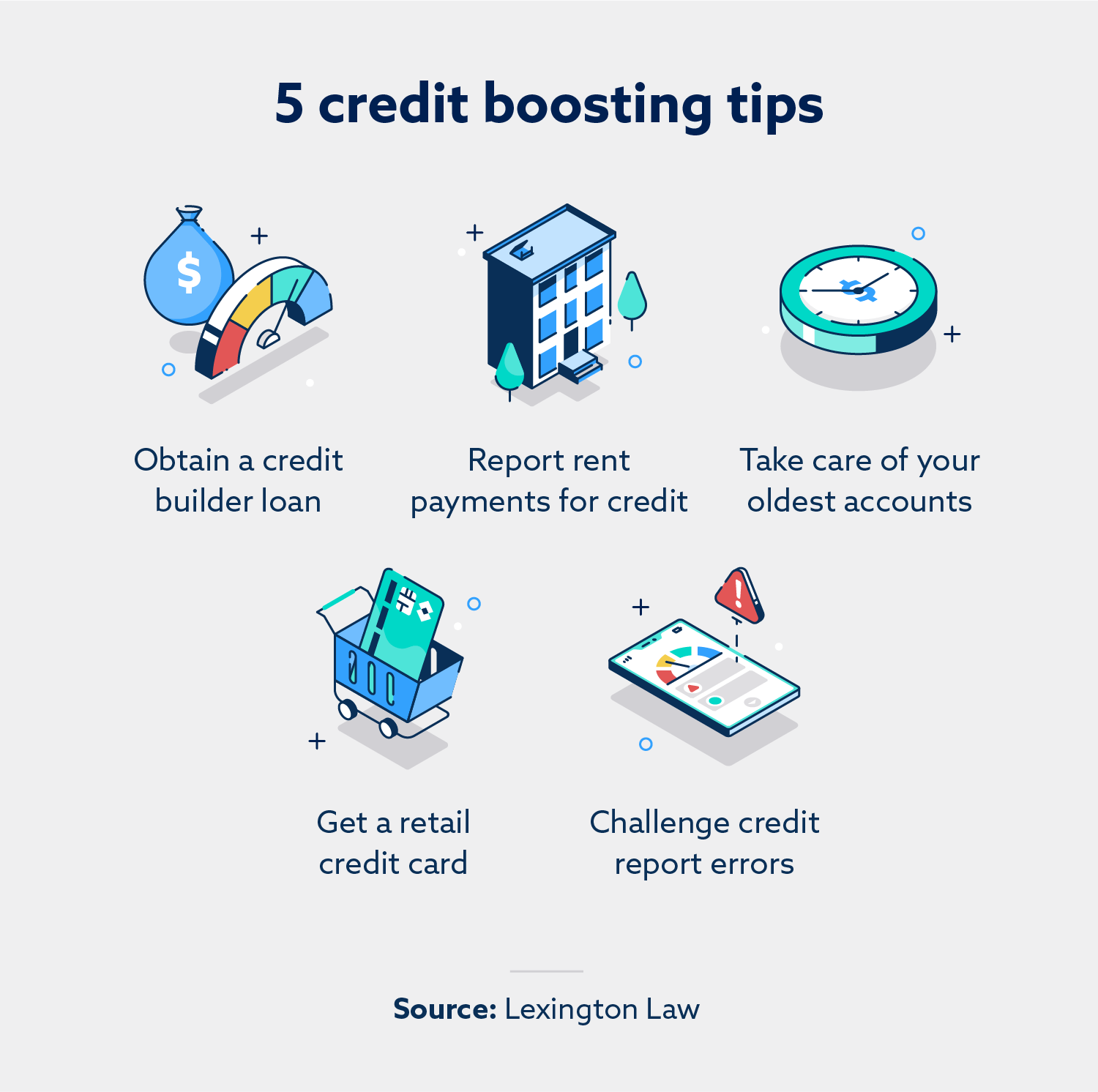
- 1. Apply for credit builder loans
- 2. Build credit with rent payments
- 3. Maintain your oldest accounts
- 4. Apply for a retail credit card
- 5. Challenge errors on your credit report
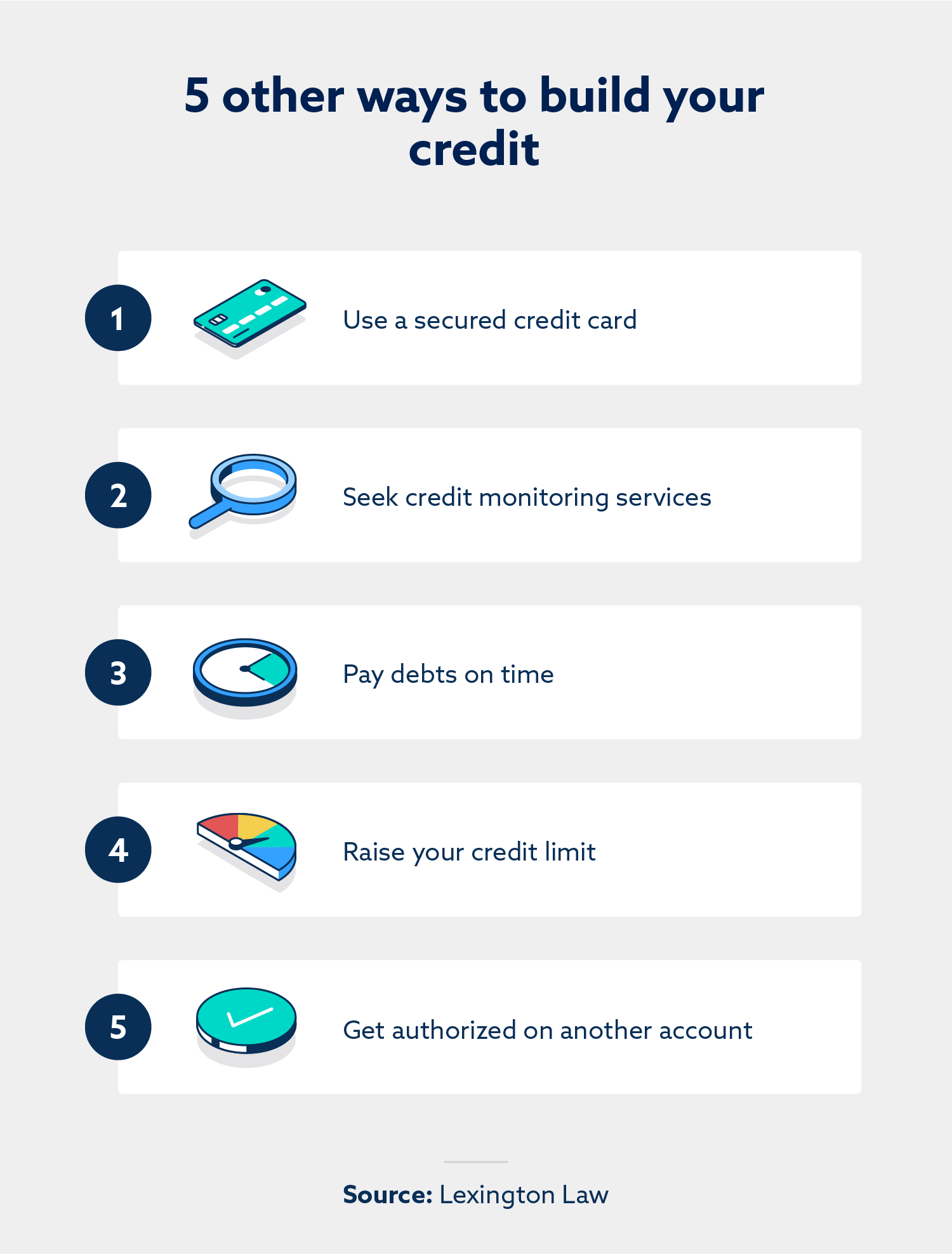
- 6. Apply for a secured credit card
- 7. Use a credit monitoring service
- 8. Make timely payments
- 9. Increase your credit limit
- 10. Become an authorized user on another account
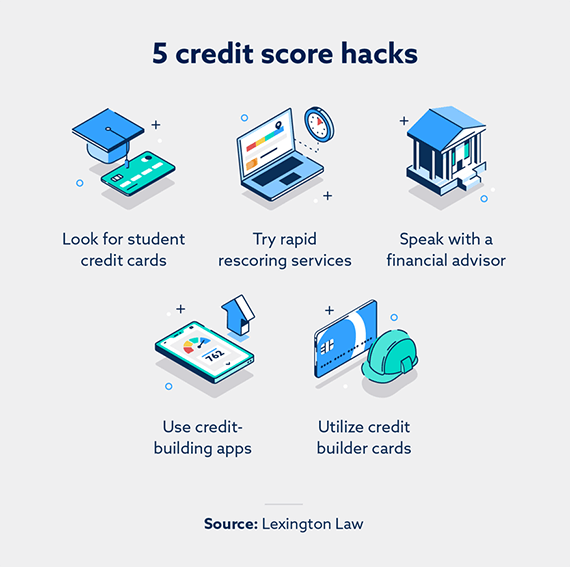
- 11. Acquire a student credit card
- 12. Use a rapid rescoring service
- 13. Meet with a financial advisor
- 14. Download credit-building apps
- 15. Use a credit builder card
- Improve your credit knowledge with Lexington Law Firm
1. Apply for credit builder loans
Any installment loan can support your credit mix and payment history when repaid responsibly, but credit builder loans are specifically designed to help borrowers establish or rebuild credit. With these loans, your monthly payments go into a secured savings account, which you gain access to at the end of the term.
Pro tip: Many lenders approve applicants with limited or no credit history, making these loans broadly accessible.
2. Build credit with rent payments
Reporting your rent can be one of the fastest ways for credit newcomers to build a payment history. Because landlords typically don’t report rent by default, you’ll need a rent-reporting service that can send your payment data to the credit bureaus.
Pro tip: Most rent-reporting services can transmit data to Equifax®, Experian®, and TransUnion®.
3. Maintain your oldest accounts
Your length of credit history—roughly 15% of your FICO® score—reflects how long you’ve been managing credit. Closing an older credit card can shorten your credit age, which may lower your score. Even if unused, keeping older accounts open helps maintain history.
Pro tip: Ask your issuer if they can waive an annual fee on older cards.
4. Apply for a retail credit card
Stores and online vendors that offer retail credit cards can help you quickly build credit if you’re a frequent shopper, with one important caveat: you must use the card responsibly. These cards may come with unique bonuses like cashback rewards or discounts. Just be careful not to overspend so you’re able to pay your balance off in full every month.
Pro tip: Retail cards can benefit frequent shoppers who also have the funds to pay off their debts quickly.
5. Challenge errors on your credit report
Credit reports are intended to reflect your spending habits, but no system is perfect. Sometimes, a payment you’ve made doesn’t get reported on time or you notice inaccuracies elsewhere on your report, like an account you never opened. Lexington Law Firm can check your credit report for errors or discrepancies and challenge them on your behalf.
Pro tip: You can request one free credit report annually from each of the three credit bureaus.
6. Apply for a secured credit card
Secured credit cards traditionally have lower interest rates and higher credit limits than unsecured cards. The caveat is that borrowers will have to put down collateral to be eligible, but responsibly using secured cards can significantly improve your credit.
Pro tip: For secured credit cards, collateral comes in the form of the cash deposit you make when you first open the account.
7. Use a credit monitoring service
Credit monitoring services can help borrowers get a better sense of what’s happening on their credit profile. Many services can also dispute errors and take action if they detect fraudulent activity. Lexington Law Firm offers credit monitoring services and other features like ID Theft Insurance and help with challenging errors on credit reports.
Pro tip: Lexington Law Firm also provides free credit assessments to help you understand which services might benefit you the most.
8. Make timely payments
Payment history accounts for roughly 35 percent of your FICO credit score and about 40 percent of your VantageScore. Consistently making payments on time will display your financial reliability and responsibility to lenders and credit bureaus.
Pro tip: Using autopay can reduce instances of forgetting to make payments on time.
9. Increase your credit limit
Your credit utilization ratio weighs your current account balances against your total credit limit. Increasing your credit limit can give you more breathing room when borrowing funds. Borrowing $500 with a $1,000 limit would give you a 50 percent utilization rate. Borrowing $500 with a $2,000 limit would give you a 25 percent utilization rate.
Pro tip: It’s best to keep your credit utilization ratio below 30 percent if you can.
10. Become an authorized user on another account
Becoming an authorized user on another account lets you borrow funds on a credit card that you may not have access to otherwise. Positive action on that account can affect everyone who’s linked to it—and the same goes for negative habits. You can become an authorized user on another account even if you have no or bad credit history, provided you have the primary account holder’s permission.
Pro tip: It’s best to only become an authorized user on an account where the cardholder already has good or better credit.
11. Acquire a student credit card
Student credit cards typically have less stringent requirements than their grown-up alternatives. Responsibly using these cards can help new borrowers prove their creditworthiness.
Pro tip: Student card requirements normally include enrollment at qualifying institutions, proof of income or a cosigner and no bad credit history.
12. Use a rapid rescoring service
It takes varying amounts of time for changes to be added to your credit report. Rapid rescoring for a mortgage can help your credit by quickly updating your credit report with new information. For a fee, a mortgage lender can pay credit reporting companies to expedite the reporting process for someone who’s looking to take out a home loan.
Pro tip: It can generally take roughly 30 to 45 days for a change to appear on your credit report.
13. Meet with a financial advisor
While it’s becoming increasingly easy to access financial information, not everyone has the years of experience needed to add context to that information. Financial advisors can offer tailored strategies to help clients reach specific goals and improve their credit standing.
Pro tip: You can find a financial advisor to meet with online if you don’t want to meet with one in person.
14. Download credit-building apps
Credit-building apps can help borrowers improve their scores in various ways. Some apps can provide custom recommendations based on the data you provide them. Others can offer incentives and in-app rewards to help promote better financial habits.
Pro tip: Many commercial banks offer free apps with credit-building features.
15. Use a credit builder card
Much like a credit builder loan, this option helps low- and no-credit borrowers increase their standing. Credit builder cards function just like normal cards, but they usually come with more stringent limits like higher interest rates and lower overall limits.
Pro tip: Credit builder cards often have more lenient eligibility requirements than other commercial bank cards.
Improve your credit knowledge with Lexington Law Firm
We’ve outlined some of the best ways to build credit fast in this guide, but there’s still plenty of additional information that could help you increase your financial literacy. Find out where your credit currently stands with a free credit assessment today.
Build credit fast: FAQ
It typically takes three to six months of reported activity to generate a credit score, though timelines may vary depending on how consistently you make on-time payments.
The fastest methods include lowering your credit utilization, making on-time payments, reporting rent, and removing inaccurate items from your credit report.
No. Checking your own credit is a soft inquiry and does not affect your score.
Yes. Reducing high revolving balances—especially if you’re above 30% utilization—can result in a noticeable improvement.
You can build credit through credit builder loans, reporting rent or utility payments, becoming an authorized user, or using credit-building apps that report payments to the bureaus.
Yes. Even a single payment 30 days late can have a significant impact, especially if you have a thin credit file or a higher-than-average score.
It can. Closing a card may decrease your credit age and increase your utilization ratio, both of which can negatively affect your score.
Yes. Products like secured cards, credit builder loans, and rent-reporting tools are specifically designed for people starting from zero.
You can check your score as often as you’d like. Monitoring it monthly—or even weekly—helps you stay aware of changes and catch errors early.
Lexington Law Firm can review your credit reports for potential inaccuracies and challenge qualifying errors on your behalf, which may help your score more accurately reflect your profile.
Note: Articles have only been reviewed by the indicated attorney, not written by them. The information provided on this website does not, and is not intended to, act as legal, financial or credit advice; instead, it is for general informational purposes only. Use of, and access to, this website or any of the links or resources contained within the site do not create an attorney-client or fiduciary relationship between the reader, user, or browser and website owner, authors, reviewers, contributors, contributing firms, or their respective agents or employers.